Cross-Border Remote Work: SRE-Grade WireGuard VPN Guide
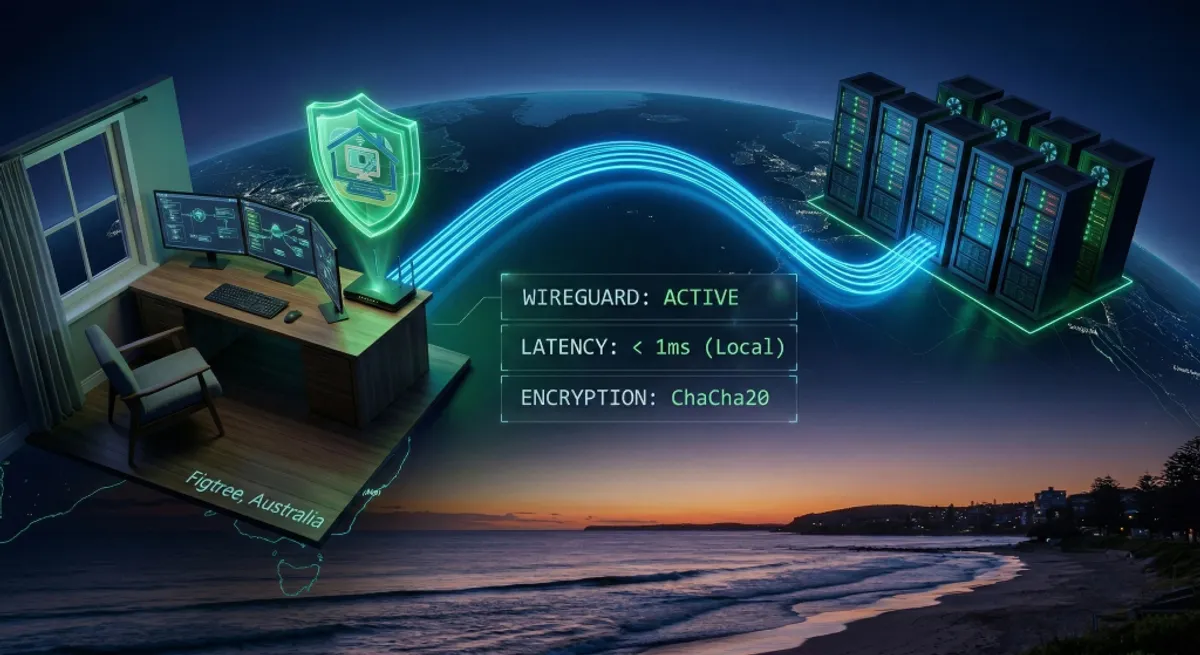
“The company VPN is so slow I can’t even load a spreadsheet.”
For a client in Figtree working for a global firm, this wasn’t just an annoyance—it was a threat to their productivity. Commercial VPNs often suffer from Congestion and Geo-blocking, while traditional corporate VPNs like OpenVPN carry massive Protocol Overhead, leading to the dreaded “lag.”
As an SRE, I don’t believe in “best effort” connectivity. I believe in Deterministic Latency and Modern Cryptography. At All Round Tech, we solved this by deploying a custom, self-hosted WireGuard node. Here is the engineering breakdown.
1. Why WireGuard? (The SRE Performance Edge)
In the SRE world, we value simplicity because simplicity equals reliability. Compared to legacy protocols, WireGuard is a masterpiece of modern engineering:
- Codebase Efficiency: OpenVPN has ~600,000 lines of code; WireGuard has ~4,000. This makes it faster and much easier to audit for security vulnerabilities.
- Kernel-Space Performance: WireGuard runs inside the OS kernel, meaning it can saturate a Gigabit NBN connection with significantly less CPU load than traditional encrypted tunnels.
- Stealth Mode: WireGuard does not respond to unauthenticated packets. To a public port scanner, your home server looks like a “Black Hole.”
2. Case Study: Figtree to Global HQ
Our client needed a secure “Bridge” that appeared as a local Australian residential IP to avoid corporate geo-fencing while maintaining sub-50ms jitter.
| Metric | Commercial VPN (Tier 1) | SRE Self-Hosted WireGuard | Improvement |
|---|---|---|---|
| Encryption Overhead | ~25% Speed Loss | < 3% Speed Loss | Massive |
| Handshake Time | 5 - 10 Seconds | < 0.1 Seconds | Instant |
| Connection Stability | Frequent Re-auth | Roams seamlessly | Rock Solid |
| Privacy | Third-party Trust | Zero-Trust (You own the keys) | Absolute |
The Deployment Stack:
We utilised a low-power ARM-based micro-server behind the client’s firewall. Using Public Key Cryptography, we established a peer-to-peer tunnel that remains “Silent” until the client’s authorised laptop initiates the handshake.
3. Hardening the Tunnel (Defense in Depth)
We don’t just “turn it on.” We engineer it for Durability:
- UDP Port Obfuscation: We move the service away from standard ports to avoid ISP throttling.
- Kill-Switch Engineering: We configured the client’s workstation so that if the tunnel drops, all internet traffic ceases. This prevents IP Leaks that could compromise corporate security compliance.
- VLAN Isolation: The VPN node sits in its own Isolated Network Zone. Even if the VPN key were compromised, the attacker has zero pathing into the rest of the Figtree home network.
4. Reclaiming Your Digital Freedom
Whether you are a developer in Wollongong or a consultant in Shellharbour, your connection to your work should be a tool, not a bottleneck. By self-hosting your infrastructure, you regain Data Sovereignty. You are no longer just a “user” of a service; you are the Owner of your private gateway.
At All Round Tech, we bring the same bank-level security I’ve used for major corporations over the past 20 years directly to your home office.
Is a slow VPN holding back your career? Book a Custom VPN & Network Audit